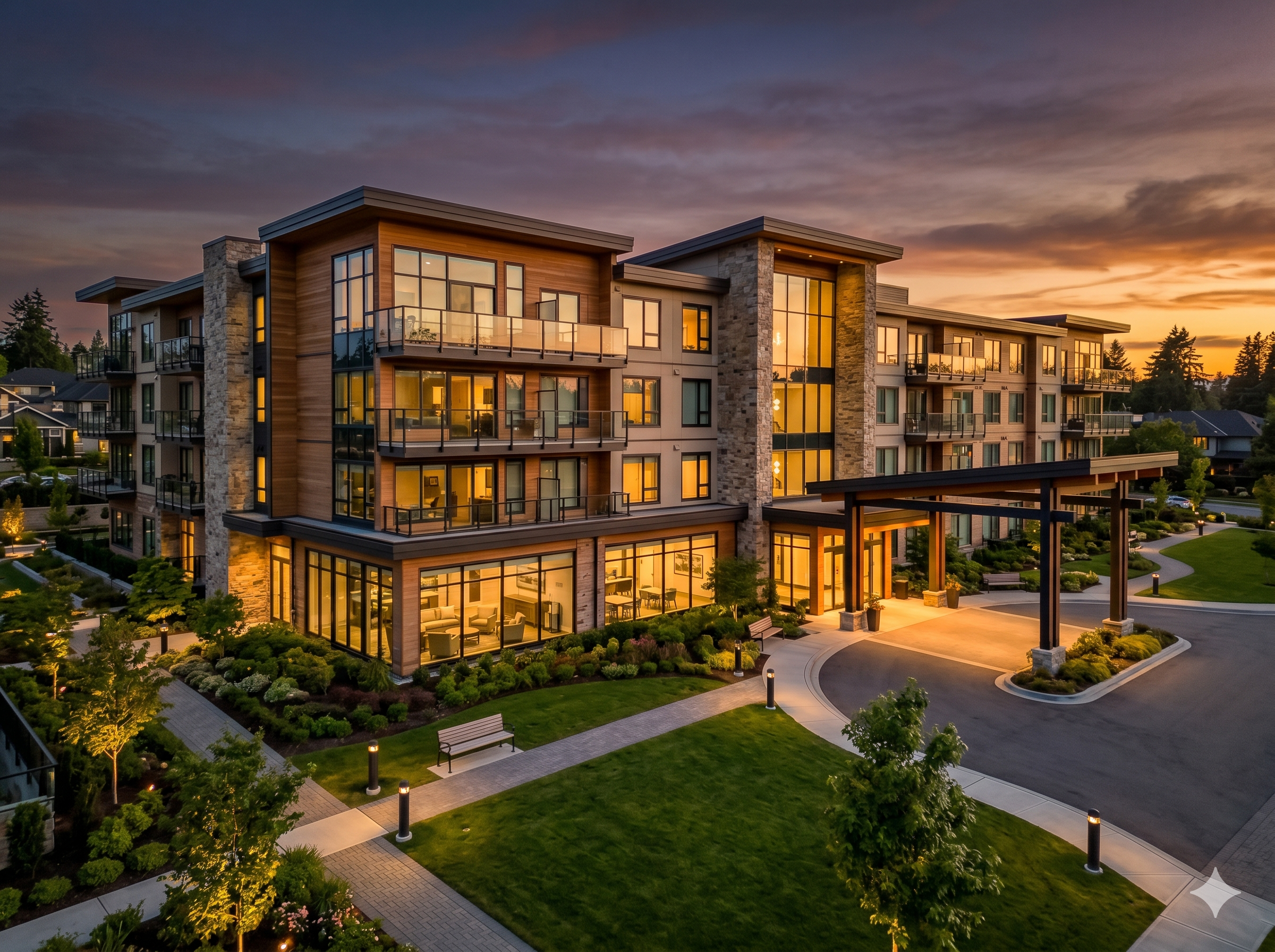
Why Senior Housing May Become a Major Real Estate Opportunity
When investors think of multi-family real estate, they typically picture garden-style apartments catering to young professionals or urban high-rises filled with Gen Z renters. However, a massive demographic shift is quietly underway, positioning an entirely different niche as one of the most compelling real estate opportunities of the decade: senior housing.
The Silver Tsunami
The primary catalyst behind this opportunity is purely mathematical. The global population is aging at an unprecedented rate, a phenomenon often referred to in real estate circles as the “Silver Tsunami.” The massive Baby Boomer generation is entering their late 70s and 80s—the prime age range for transitioning out of traditional single-family homes.
This demographic shift is creating a predictable, unavoidable surge in demand for specialized housing. Unlike standard rental markets that fluctuate heavily with economic cycles, the need for senior living is driven by biological inevitability and necessity, making it an incredibly resilient asset class.
Evolution of the Product: Beyond Nursing Homes
Modern senior housing is vastly different from the institutional settings of past generations. Today’s market is highly segmented to offer a spectrum of care, blending real estate with specialized hospitality and wellness:
Active Adult Communities (55+): Age-restricted multi-family properties focusing on maintenance-free living, vibrant social calendars, and resort-style amenities for independent seniors.
Independent Living: Apartment-style communities that include centralized dining, housekeeping, and transportation services, but do not provide medical care.
Assisted Living & Memory Care: Higher-touch communities that integrate daily residential living with professional health monitoring, personal care assistance, and specialized memory support.
This variation allows multi-family developers to build properties tailored to specific sub-markets, focusing on lifestyle and community rather than just clinical care.
Robust Investment Fundamentals
For real estate investors, senior housing offers a unique combination of defensive characteristics and high upside. Because moving into an assisted or independent living facility is often a health-driven decision, occupancy rates tend to hold steady even during economic downturns.
Furthermore, senior housing historically commands higher average monthly revenue per occupied room compared to traditional apartments, driven by the bundled services (meals, care, activities) provided on-site. As single-family home equity reaches historic highs, incoming residents are well-capitalized, frequently using the proceeds from selling their long-term family homes to fund their transition into senior living.
Meeting the Horizon
Investing in senior housing requires operational expertise beyond standard property management, as hospitality and care components are vital to success. However, for forward-thinking multi-family investors, the macroeconomic indicators are impossible to ignore. The demand is locked in, the supply gap is widening, and senior housing is poised to transition from a alternative niche into a mainstream institutional powerhouse.